
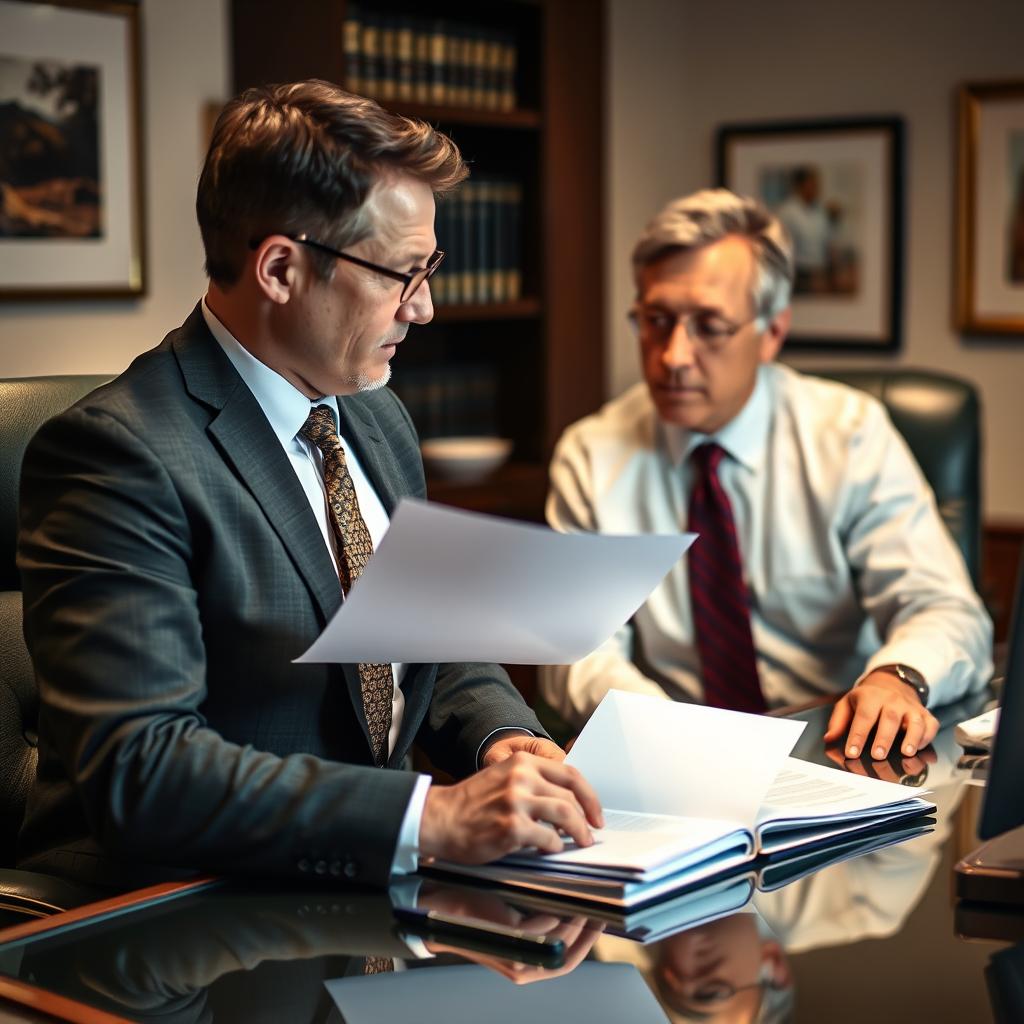
Breath Test Refusal Lawyer Virginia Beach, VA
When a law enforcement officer in Virginia Beach requests a breath test during a DUI investigation, the decision to refuse is not a simple “no”—it triggers immediate administrative and potential criminal consequences under Virginia’s implied consent statute, Va. Code § 18.2‑268.3. A breath test refusal can result in license suspension, civil penalties, and, for repeat refusals, misdemeanor charges carrying jail time. If you are facing a breath test refusal allegation in Virginia Beach, the legal approach chosen can significantly affect your driving privileges and criminal record. Mr. Sris and his Of Counsel team at Law Offices Of SRIS, P.C. represent individuals in Virginia Beach who are dealing with refusal-related proceedings at the Virginia Beach General District Court. To request a consultation, call (888) 437‑7747. Law Offices Of SRIS, P.C. — Advocacy Without Borders.
Under Va. Code § 18.2‑268.3, a first-offense breath test refusal in Virginia is a civil violation that results in a one-year driver’s license suspension. A second refusal within 10 years is a Class 2 misdemeanor, and a third or subsequent refusal is a Class 1 misdemeanor, punishable by up to 12 months in jail and a $2,500 fine.
Source: Va. Code § 18.2‑268.3. Virginia Legislative Information System
Reviewed by Mr. Sris, admitted in VA/MD/DC/NJ/NY.
What Breath Test Refusal Means in Virginia Beach
Virginia’s implied consent law deems that any person operating a motor vehicle on public roads has already consented to a chemical test of breath or blood if lawfully arrested for driving under the influence. A refusal to take a breath test—whether the driver remains silent or verbally declines—is not protected by the right to remain silent in this context; it is a separate legal event with its own consequences. In Virginia Beach, the matter is adjudicated through the General District Court, located at 2425 Nimmo Parkway, Building 10B. The court hears refusal cases alongside related DUI charges, and the outcome can affect both the administrative license suspension imposed by the Virginia Department of Motor Vehicles and any criminal charges arising from a prior DUI arrest.
Virginia Beach’s status as a coastal city with heavy seasonal tourism means law enforcement officers routinely conduct sobriety checkpoints and traffic stops along major routes such as I‑264, Shore Drive, and Atlantic Avenue. A breath test refusal in this environment frequently arises after a stop that the officer claims was based on reasonable suspicion. Because the refusal hearing is independent from the criminal DUI case, even a finding of not guilty on the underlying DUI does not automatically resolve a refusal allegation. The refusal proceeding is a separate civil or criminal matter where the Commonwealth must prove that the driver unreasonably refused to submit to the test, and the driver has the right to present evidence and challenge the officer’s account.
How Mr. Sris and His Of Counsel Handle Breath Test Refusal Cases
Mr. Sris and his Of Counsel approach each breath test refusal matter by first examining whether the initial traffic stop was lawful. If the officer lacked reasonable suspicion or probable cause to make the stop, the evidence of the refusal may be subject to exclusion. The team also evaluates whether the driver was properly advised of Virginia’s implied consent law and the consequences of refusing. An officer’s failure to give a clear and accurate warning can affect the admissibility of the refusal at the hearing. Mr. Sris and his Of Counsel scrutinize the police reports, dashboard camera footage, and witness statements to identify procedural errors and factual inconsistencies.
Once the factual and legal issues are identified, Mr. Sris and his Of Counsel work to negotiate with the Commonwealth’s Attorney, where appropriate, to seek a favorable resolution—such as an agreement to treat a first-offense refusal as a civil infraction without aggravating factors or, in some cases, to have the refusal finding set aside. When negotiation is not possible, the team prepares for a contested hearing at the Virginia Beach General District Court, presenting evidence that the refusal was not knowing or voluntary, that the officer did not have grounds for the stop, or that the driver was not given a genuine opportunity to comply. Throughout the process, Mr. Sris and his Of Counsel keep the client informed of the potential impacts on driving privileges, insurance rates, and any related criminal case.
About Mr. Sris and His Of Counsel Team
Mr. Sris, Owner and Founder of Law Offices Of SRIS, P.C., has been practicing since 1997 and is admitted in Virginia, Maryland, the District of Columbia, New Jersey, and New York. As a former prosecutor, he brings insight into how the Commonwealth builds its cases in DUI and refusal matters. Mr. Sris testified before the Virginia House Courts of Justice Committee in support of 2019 HB 635 (chief patron Del. David Bulova). His Of Counsel team includes attorneys with deep traffic-defense experience, including a former Virginia State Trooper whose law enforcement background provides a thorough understanding of police procedures, accident investigation protocols, and the practical aspects of breath-test administration.
Mr. Sris and his Of Counsel bring over 120 years of combined legal experience; the firm has achieved 4,739+ documented firm-wide results. Results may vary. The team’s familiarity with Virginia Beach General District Court procedures allows them to present evidence effectively and advocate for clients facing license suspensions and related charges. The firm’s Richmond Location serves clients in Virginia Beach; consultations are available by appointment.
Frequently Asked Questions
How does a Virginia lawyer defend against breath test refusal charges?
An experienced attorney defends against refusal charges by challenging the legality of the traffic stop, the adequacy of the implied consent warning, and whether the refusal was knowing and voluntary. Virginia law requires that the officer have reasonable suspicion to stop the driver and probable cause to arrest for DUI before demanding a breath test. If either element is missing, the refusal evidence may be suppressed. Additionally, the attorney examines whether the driver was properly advised of the consequences under Va. Code § 18.2‑268.3 and whether any language barrier, medical condition, or confusion rendered the refusal involuntary. At the hearing, the attorney can cross‑examine the officer and present evidence to rebut the Commonwealth’s case. The goal is to prevent the civil license suspension or, if criminal charges apply, to seek a reduction or dismissal. Each case is evaluated on its specific facts.
What should I do if I am facing breath test refusal charges in Virginia Beach?
If you are facing breath test refusal charges, contact a traffic attorney promptly and avoid discussing the incident with anyone other than your lawyer. In Virginia Beach, the court sets a hearing date shortly after the arrest, and acting quickly can help preserve your driving privileges. You have the right to review the police report and any video evidence. Refrain from posting on social media about the stop, as those statements may be used against you. An attorney can help you understand the timeline, the potential penalties, and the options available. Because the refusal matter is often heard alongside a DUI charge, early intervention allows for a coordinated defense strategy. To request a consultation, call Law Offices Of SRIS, P.C. at (888) 437‑7747.
What are the penalties for breath test refusal in Virginia?
The penalties depend on the number of prior refusals: a first-offense refusal is a civil violation with a one-year license suspension; a second offense within 10 years is a Class 2 misdemeanor; and a third or subsequent offense is a Class 1 misdemeanor carrying up to 12 months in jail and a $2,500 fine. In all cases, the Virginia DMV imposes an administrative license suspension independent of the court proceeding. A first‑offense civil refusal does not create a criminal record, but repeat offenses result in criminal charges that can affect employment, professional licensing, and auto insurance rates. There is no restricted license for a refusal suspension; the suspension period must be served in full. The suspension for a refusal is separate from any suspension imposed for a related DUI conviction. A skilled traffic attorney can challenge the refusal finding and seek to avoid the civil and criminal consequences.
Can a breath test refusal charge be dismissed?
Yes, a breath test refusal charge can be dismissed if the evidence shows that the stop was unlawful, the implied consent warning was improper, or the driver did not unreasonably refuse. The Commonwealth bears the burden of proving that the driver’s refusal was unreasonable. If the officer failed to read the implied consent statute correctly or did not have valid grounds to arrest for DUI, the refusal finding may be set aside at the hearing. An experienced lawyer will review the officer’s report, the dash‑cam footage, and the probable‑cause affidavit to find weaknesses. A dismissal of the refusal allegation means the driver’s license is not suspended for that incident, and any related criminal refusal charge is resolved favorably. The outcome depends on the specific facts; Results may vary.
Is refusing a breath test the same as a DUI conviction?
No, refusing a breath test is not the same as a DUI conviction; it is a separate legal matter with distinct consequences. A DUI charge is a criminal offense under Va. Code § 18.2‑266, while a first‑offense refusal is a civil violation. A driver can be found guilty of DUI even if they refused the breath test, provided the prosecution proves impairment through other evidence such as field sobriety tests, officer observations, and witness testimony. Conversely, a refusal finding does not automatically prove DUI. However, the fact of refusal can be introduced as evidence in the DUI trial to suggest consciousness of guilt. Therefore, a driver facing both a DUI and a refusal charge needs a coordinated defense that addresses each matter independently while recognizing how they may interact at trial.
Related traffic defense locations: Fairfax County Traffic Lawyer · Fairfax City Traffic Lawyer · Falls Church Traffic Lawyer · Prince William County Traffic Lawyer
Additional resources: Va. Code § 18.2‑268.3 (Implied Consent) · Virginia Beach General District Court · Virginia Department of Motor Vehicles
Attorney advertising. Prior results do not guarantee a similar outcome. Results may vary.
Case results depend on a variety of factors unique to each case.