
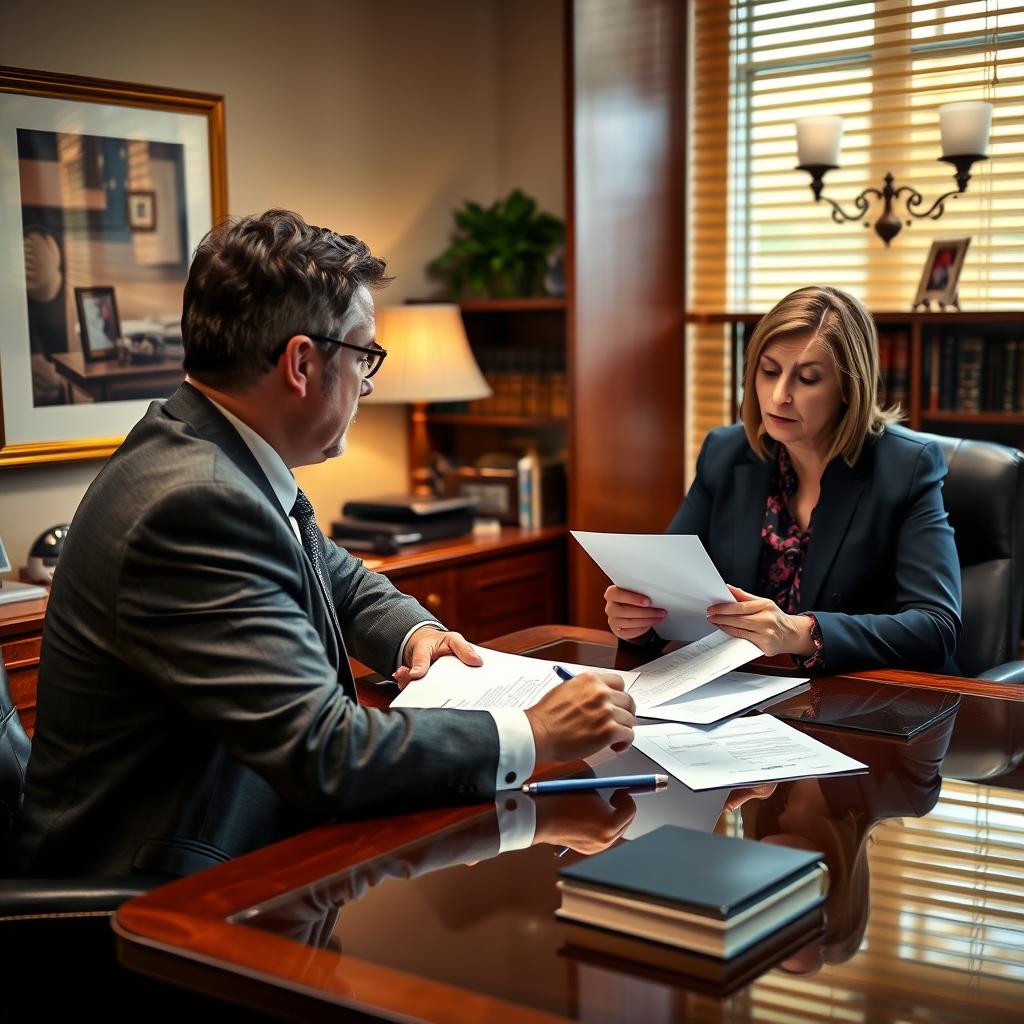
Refusal Lawyer Chesapeake, VA

You were driving through Chesapeake — maybe on I-64 near Greenbrier, or crossing the High Rise Bridge on I-664. An officer pulled you over and, after asking a series of questions, requested that you submit to a breath test. You hesitated, or you outright declined. Now you’re holding a summons for refusal under Virginia’s implied consent law, and you know the consequences can be severe — a suspended license, fines, and even a criminal record if this isn’t your first refusal. Breath test refusal charges are handled at Chesapeake General District Court, 307 Albemarle Drive, Chesapeake, Virginia 23322. If you’re looking for a refusal lawyer in Chesapeake who understands how these cases play out in this courthouse, Mr. Sris and his Of Counsel bring over 120 years of combined legal experience and have achieved 4,739+ documented firm-wide results, including familiarity with the procedures and personnel at the Chesapeake courts. Results may vary. To discuss your specific case and your options, contact Law Offices Of SRIS, P.C. at (888) 437-7747. Law Offices Of SRIS, P.C. – Advocacy Without Borders.
What Breath Test Refusal Means in Chesapeake, Virginia
Virginia law treats driving as a privilege, not a right, and when you hold a Virginia driver’s license you have already given what is called “implied consent” to a breath or blood test if you are arrested for driving under the influence. The operative statute is Va. Code § 18.2‑268.3. Under that statute, an unreasonable refusal to submit to a chemical test after a lawful DUI arrest triggers its own set of consequences — separate from any DUI charge the Commonwealth might also bring.
In Chesapeake, refusal cases are heard at the Chesapeake General District Court on Albemarle Drive. This courthouse serves Chesapeake, Deep Creek, Great Bridge, and the surrounding communities. The General District Court does not conduct jury trials, but the judge will preside over a bench trial if your case proceeds that far. For a first‑offense refusal, the matter is civil‑administrative — not a criminal charge — and the primary penalty is a one‑year suspension of your driver’s license. A second refusal within ten years becomes a Class 2 misdemeanor, and a third or subsequent refusal is a Class 1 misdemeanor, carrying the possibility of jail time. However, even a first refusal can complicate a related DUI prosecution and may affect your ability to obtain a restricted license. The Chesapeake courts treat refusal seriously, and having an attorney who regularly appears in that courthouse can make a meaningful difference in how your case is presented.
How Mr. Sris and His Of Counsel Handle Refusal Cases
When a refusal charge lands on your record, Mr. Sris and his Of Counsel approach the case by methodically examining everything that happened before, during, and after the traffic stop. Because the refusal is tied to the propriety of the underlying DUI arrest, a key focus is whether the officer had a legally sufficient reason to stop your vehicle in the first place and whether probable cause existed for the arrest. If the stop itself was flawed, any evidence flowing from it — including the request for a breath test — may be subject to challenge.
The team also looks carefully at how the refusal was obtained. Virginia’s implied‑consent statute requires that the officer inform you of certain consequences before you make your decision. If the officer failed to give the proper warnings, or if the circumstances surrounding your refusal were ambiguous or coerced, those facts can be raised in court. Mr. Sris and his Of Counsel draw on extensive experience: one member of the team is a former Virginia State Trooper who spent 15 years conducting traffic investigations across the Commonwealth, and another is a former Maryland prosecutor with years of courtroom trial experience. That combination of perspectives — knowing how law enforcement officers train, how they document refusals, and how prosecutors evaluate these cases — allows the team to build a strong, fact‑based defense. They examine dash‑camera footage, body‑worn camera recordings, and the officer’s narrative report for inconsistencies or procedural errors. The goal is always to work toward the most favorable outcome possible under Virginia law. Results may vary.
About Mr. Sris and His Of Counsel Team
Mr. Sris is the Owner and Founder of Law Offices Of SRIS, P.C., which he established in 1997. He is a former prosecutor and is admitted to practice in Virginia, Maryland, the District of Columbia, New Jersey, and New York. Over the past 28 years, he has built a multi‑state practice focused on defending individuals against serious traffic and criminal charges, including refusal and DUI matters.
Mr. Sris and his Of Counsel team bring more than 120 years of combined legal experience. Results may vary. The firm regularly represents clients at the Chesapeake General District Court and the Chesapeake Circuit Court. Mr. Sris’s Of Counsel include a former Virginia State Trooper who understands the inner workings of traffic‑enforcement procedures, and a former Maryland prosecutor with deep courtroom experience. Every attorney handling refusal cases in Chesapeake works on a foundation of thorough preparation and careful attention to the evidence. The firm has documented 5 case results in Chesapeake traffic matters — 1 dismissal or not‑guilty finding and 4 reduced or amended charges — with all five producing favorable outcomes. Past outcomes do not guarantee a similar result.
Frequently Asked Questions
How does a Virginia lawyer defend against breath test refusal charges?
A Virginia lawyer defends against breath test refusal charges by examining the legality of the traffic stop, the validity of the DUI arrest, whether proper warnings were given, and whether the refusal itself was knowing and voluntary. An experienced attorney will also scrutinize the officer’s reports, review any video recordings, and argue any procedural errors or constitutional violations that undermine the Commonwealth’s case. If the stop lacked reasonable suspicion or the arrest lacked probable cause, the refusal evidence may be excluded. Defense strategies in Chesapeake are tailored to Virginia’s implied‑consent statute, Va. Code § 18.2‑268.3, and to the practices of the Chesapeake General District Court. To discuss your specific situation, reach Law Offices Of SRIS, P.C. at (888) 437-7747.
What should I do if I am facing refusal charges in Chesapeake, Virginia?
If you are facing refusal charges in Chesapeake, your most immediate step should be to contact a traffic attorney who regularly handles refusal cases at the Chesapeake General District Court. Do not discuss the facts of your case with anyone except your lawyer, and avoid posting anything about the incident on social media. Preserve all documents you received from the officer, including the summons and any notice of license suspension. Virginia’s implied‑consent law carries a tight timeline for requesting an administrative hearing on your license suspension, so acting quickly is important. An attorney can help you understand both the civil‑administrative and any criminal consequences and can begin working on your defense before your court date. For a consultation, reach Mr. Sris and his Of Counsel at (888) 437-7747.
What are the penalties for breath test refusal in Virginia?
The penalties for breath test refusal in Virginia depend on the number of prior refusal offenses within the last 10 years. A first offense is a civil violation resulting in a mandatory one‑year driver’s license suspension, with no possibility of a restricted license during that period. A second refusal within 10 years is a Class 2 misdemeanor, and a third or subsequent refusal is a Class 1 misdemeanor, which can carry jail time and a substantial fine. Additionally, a refusal finding can be introduced as evidence in a related DUI prosecution and may adversely affect a judge’s perception of your case. The specific consequences in your situation will depend on the facts and any prior record. To discuss the details of your matter, contact Law Offices Of SRIS, P.C. at (888) 437-7747.
Do I need a lawyer for a refusal charge in Chesapeake?
You are not legally required to have a lawyer for a refusal charge in Chesapeake, but representation significantly improves your ability to protect your license and your record. Because a refusal triggers an automatic license suspension that can impact your ability to work and attend to daily responsibilities, having an attorney who can challenge the suspension and advocate for you at the Chesapeake General District Court is a practical necessity for most people. An attorney can also explain the interplay between the refusal charge and any parallel DUI charge you may be facing. For guidance on your specific situation, reach Law Offices Of SRIS, P.C. at (888) 437-7747.
How soon should I contact a refusal lawyer after being charged in Chesapeake?
You should contact a refusal lawyer as soon as possible after receiving the charge because swift action is often needed to contest the administrative license suspension and preserve evidence. Virginia law provides a limited window in which to challenge the suspension administratively, and early communication with an attorney allows for the timely collection of dash‑camera footage and other evidence that may strengthen your defense. In Chesapeake, cases move through the General District Court on a schedule set by the court, and early preparation positions your legal team to negotiate with the Commonwealth or prepare for trial effectively. For a consultation, reach Mr. Sris and his Of Counsel at (888) 437-7747.
Related Traffic Defense Pages in Virginia:
Traffic lawyer in Fairfax County
Traffic lawyer in Prince William County
Traffic lawyer in Manassas
Virginia Primary Sources:
Virginia Code § 18.2‑268.3 — Implied Consent
Chesapeake General District Court
Attorney advertising. Prior results do not guarantee a similar outcome. Results may vary.
Case results depend on a variety of factors unique to each case.